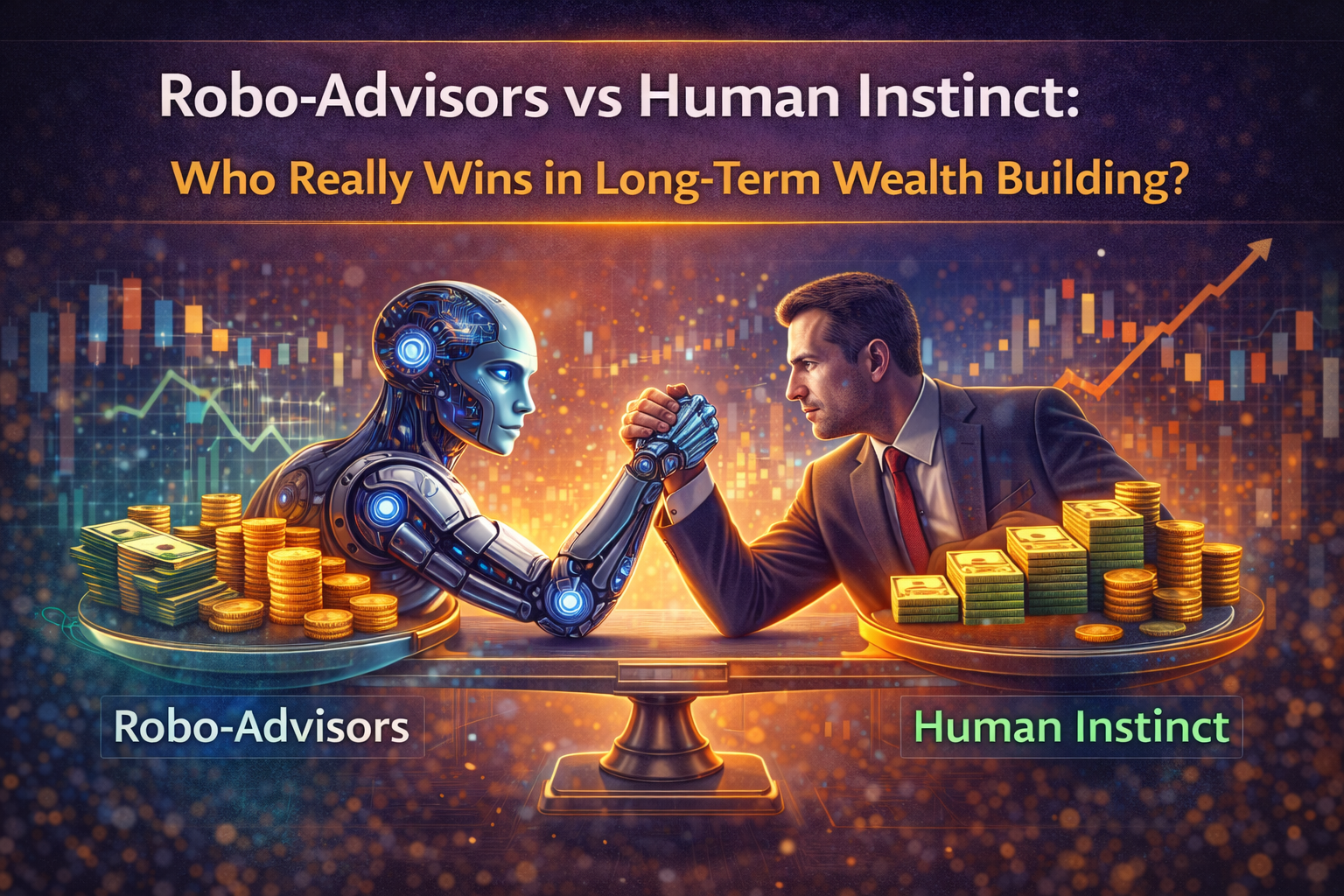
The rapid evolution of financial technology has transformed how individuals invest, save, and build wealth. Among the most significant developments is the rise of robo-advisors—automated digital platforms that manage investment portfolios using algorithms and data-driven strategies. These systems promise efficiency, low costs, and disciplined decision-making without the emotional biases that often affect human investors. Yet, despite their growing popularity, many people still rely on human instinct when making financial decisions, trusting experience, intuition, and personal judgment over automated recommendations.
This contrast raises an important question for modern investors: when it comes to long-term wealth building, is it better to rely on algorithmic precision or human intuition?
The Emergence of Robo-Advisors
Robo-advisors gained traction after the global financial crisis, when investors began seeking low-cost alternatives to traditional financial advisory services. Powered by artificial intelligence and quantitative models, these platforms assess an investor’s financial goals, time horizon, and risk tolerance through digital questionnaires. Based on this information, they construct diversified portfolios typically composed of exchange-traded funds (ETFs) and automatically rebalance them over time.
One of their most attractive features is accessibility. Investors no longer need large amounts of capital to receive professional-style portfolio management. With relatively small initial investments, individuals can access diversified strategies that were once reserved for wealthy clients. Automation also reduces operational costs, allowing robo-advisors to charge significantly lower fees than traditional advisors.
Additionally, robo-advisors operate continuously and consistently. They monitor market conditions, adjust asset allocations, and reinvest dividends without requiring constant user intervention. This systematic approach removes the need for frequent manual decisions, making investing simpler for individuals with limited financial expertise.
The Power of Algorithmic Discipline
One of the strongest arguments in favor of robo-advisors is their ability to eliminate emotional bias. Human investors are prone to psychological traps such as panic selling during market downturns or excessive risk-taking during bullish periods. Fear and greed often lead to poor timing decisions, which can significantly reduce long-term returns.
Algorithms, by contrast, follow predefined rules based on statistical models and historical patterns. They do not react emotionally to sudden market fluctuations or sensational news headlines. Instead, they maintain consistent investment strategies, rebalancing portfolios according to long-term objectives rather than short-term market sentiment.
This disciplined approach can be particularly valuable during periods of high volatility. While human investors might be tempted to abandon their strategies in uncertain times, automated systems continue operating based on probability-driven frameworks, often preventing costly impulsive decisions.
Human Instinct: The Role of Experience and Judgment
Despite the advantages of automation, human decision-making retains unique strengths. Experienced investors can interpret broader economic contexts that algorithms may not fully capture. Political developments, regulatory changes, and unexpected global events often involve complexities that extend beyond historical data patterns.
Human advisors also offer personalization that goes beyond numerical risk assessments. They can understand emotional concerns, life circumstances, and evolving financial priorities that are difficult to quantify. For example, individuals approaching retirement may value reassurance and tailored planning discussions that automated systems cannot fully provide.
Furthermore, intuition developed through years of experience can help identify opportunities that data models might overlook. While algorithms rely on structured datasets, human investors can consider qualitative factors such as leadership credibility, market sentiment shifts, and emerging social trends that may influence long-term economic dynamics.
Adaptability in Unpredictable Markets
Financial markets are shaped by uncertainty. Crises such as pandemics, geopolitical conflicts, or sudden regulatory shifts can produce conditions never seen before in historical data. Since robo-advisors depend heavily on past patterns, their predictive models may struggle when faced with unprecedented events.
Human investors, although imperfect, can adapt strategies more flexibly during such situations. They can incorporate real-time interpretations, reassess risk exposure, and apply strategic judgment that goes beyond algorithmic outputs. In highly unusual circumstances, the ability to think creatively and reassess assumptions becomes particularly valuable.
However, adaptability can also be a double-edged sword. While flexibility allows humans to respond dynamically, it may also lead to overreaction or inconsistent strategies influenced by emotional stress.
Cost Efficiency vs Personalized Guidance
Cost remains a critical factor in the comparison. Robo-advisors typically charge a fraction of the fees required by human advisors. Lower expenses allow a greater portion of investment returns to remain within the portfolio, compounding over time and enhancing long-term growth potential.
For many small and medium investors, affordability makes robo-advisors an attractive option. Paying high advisory fees can erode gains, especially during periods of moderate market performance.
On the other hand, high-net-worth individuals or those with complex financial situations often require specialized services that automated platforms cannot fully deliver. Estate planning, tax optimization across jurisdictions, business succession strategies, and customized risk management frequently demand human expertise.
Data Processing Power vs Emotional Intelligence
Robo-advisors excel at processing enormous volumes of financial data at remarkable speeds. They can evaluate thousands of securities, track correlations, and optimize portfolios using advanced quantitative techniques. This computational capability surpasses human capacity and enables highly efficient diversification.
However, wealth building is not purely mathematical. Emotional intelligence plays a crucial role in financial planning. Major life decisions—buying a home, funding education, planning retirement—carry psychological weight that extends beyond numerical calculations.
Human advisors can provide reassurance during downturns, helping clients stay committed to long-term strategies. Emotional support often prevents rash decisions that could undermine financial stability.
The Hybrid Approach: Combining Strengths
Rather than viewing robo-advisors and human instinct as opposing forces, many experts advocate for hybrid models that integrate both strengths. In these systems, automated platforms handle routine portfolio management and data analysis, while human advisors provide strategic oversight and personalized planning.
This combination offers cost efficiency alongside tailored guidance. Algorithms ensure disciplined execution, while humans interpret broader contexts and adjust strategies when necessary.
Hybrid approaches are becoming increasingly common in wealth management firms, where technology enhances efficiency without eliminating the human element. Investors benefit from automation’s precision while retaining access to professional judgment.
Which Approach Wins in the Long Term?
Determining a clear winner depends largely on investor profiles and financial goals. For individuals seeking low-cost, diversified, and hands-off investment management, robo-advisors may offer superior long-term value. Their systematic discipline and efficiency reduce behavioral mistakes and operational costs.
Conversely, investors with complex financial needs or those who value personalized interaction may benefit more from human guidance. The reassurance, contextual understanding, and tailored strategies offered by experienced professionals can provide advantages beyond algorithmic optimization.
Ultimately, long-term wealth building is not solely about choosing between technology and intuition. Success depends on maintaining disciplined strategies, controlling costs, adapting to changing circumstances, and aligning investments with personal objectives.
Conclusion
The debate between robo-advisors and human instinct reflects a broader transformation in modern finance. Technology has democratized investment management, offering powerful tools that enhance efficiency and accessibility. At the same time, human judgment continues to provide contextual awareness, emotional intelligence, and strategic flexibility.
Rather than replacing one another, automated systems and human expertise increasingly function as complementary forces. Investors who understand how to leverage both may achieve stronger and more resilient long-term financial outcomes.
In the end, the true winner in wealth building is not solely artificial intelligence or human intuition—but the ability to combine technological precision with thoughtful decision-making.