A Turning Point for Everyday Finances
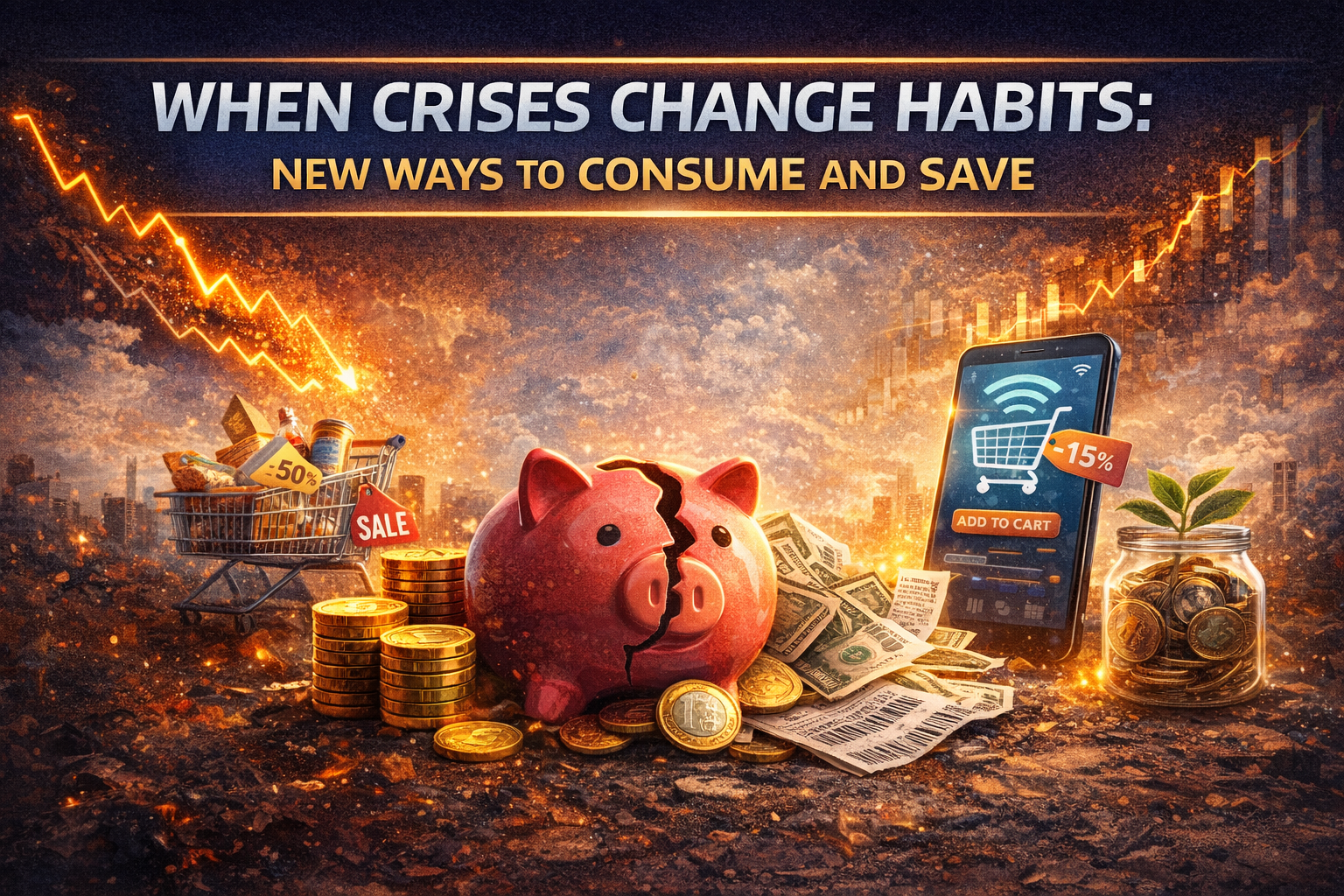
Economic crises do more than disrupt financial systems and slow business activity; they reshape the daily habits of millions of people. Periods of instability force individuals and families to reconsider how they spend, save, and plan for the future. What begins as a temporary reaction to uncertainty often evolves into long-term behavioral change. Financial pressure encourages people to question priorities, redefine necessities, and adopt more conscious approaches to money management.
From Impulse to Intention
One of the most immediate consequences of economic turmoil is a shift in consumer priorities. When income becomes uncertain and job security weakens, households focus first on essential expenses. Housing, utilities, food, healthcare, and education naturally take precedence over discretionary spending. Activities such as travel, entertainment subscriptions, dining out, and luxury purchases often decline sharply.
This transformation is not merely a financial adjustment but also a psychological one: consumers become more aware of the difference between wants and needs. The experience teaches individuals to evaluate purchases more carefully and to think long-term rather than seeking instant gratification.
The Rise of Strategic Budgeting
Financial pressure pushes people to compare options, search for value, and delay purchases until they are truly necessary. Budgeting, once seen as restrictive, becomes a practical survival tool. Families that previously paid little attention to monthly expenses begin tracking spending categories, identifying inefficiencies, and setting financial limits.
Over time, this discipline strengthens financial stability and reduces vulnerability to future shocks. Planning replaces improvisation, and households gain a clearer understanding of how small daily decisions influence long-term financial health.
Smarter Consumers in a Price-Conscious Era
Price sensitivity increases significantly during difficult periods. Consumers become more attentive to discounts, promotions, and lower-cost alternatives. Supermarkets often see rising demand for store-brand products, while generic goods gain acceptance across many sectors.
The stigma once associated with cheaper alternatives gradually disappears as practicality takes priority over brand loyalty. People recognize that higher prices do not always guarantee better quality, leading to more rational and informed purchasing decisions focused on real value.
Digital Tools Reshaping Financial Behavior
Technology plays a critical role in transforming consumption patterns. Online platforms allow consumers to compare prices instantly, read reviews, and evaluate alternatives with greater transparency. Mobile applications track expenses in real time, helping users remain within budget limits.
Digital banking tools simplify financial management by enabling automatic savings transfers, spending alerts, and balance monitoring. These resources empower individuals to make data-driven decisions and maintain closer control over their money. As a result, digital literacy becomes an essential component of financial resilience.
Saving as a Protective Instinct
Another major behavioral shift during crises is the renewed importance of saving. Financial uncertainty highlights the vulnerability of households without emergency funds. Fear of unemployment, unexpected medical bills, or sudden income loss motivates people to build financial cushions.
Even individuals who previously struggled to save begin setting aside small amounts regularly. This precautionary approach prioritizes safety and liquidity over high returns. The goal is not rapid wealth accumulation but protection against future instability.
Changing Attitudes Toward Debt
Economic hardship often alters perceptions of borrowing. During stable periods, credit can appear as a convenient tool for immediate consumption. However, crises expose the risks of excessive debt, particularly when income becomes unpredictable.
As a result, many households focus on reducing outstanding balances and avoiding high-interest loans. Paying off credit cards and restructuring financial obligations become priorities. This shift promotes healthier financial habits and reduces long-term vulnerability.
A More Conscious Lifestyle
Beyond finances, crises inspire broader lifestyle adjustments. People become more resourceful, repairing items instead of replacing them and reusing products whenever possible. Second-hand markets grow, and sharing services become more common.
These behaviors foster sustainability while reducing expenses. Consumers realize that well-being does not always depend on constant spending. Simpler lifestyles often provide greater satisfaction and less financial pressure.
Balancing Prudence and Well-Being
While caution is beneficial, excessive financial restriction can harm quality of life. Constant fear-driven saving may lead to stress and social isolation. Therefore, individuals must learn to balance responsible money management with personal enjoyment.
Conscious spending — choosing meaningful expenses while avoiding waste — helps maintain emotional health without compromising financial stability. This balanced mindset creates a healthier relationship with money.
Long-Term Lessons from Difficult Times
Although some habits relax as economies recover, many lessons remain. People who experience financial hardship tend to value stability more deeply and maintain cautious spending patterns. Emergency funds, diversified income sources, and financial planning become lasting priorities.
These experiences create more financially aware individuals who better understand economic risk. Over time, entire generations develop stronger saving cultures and more thoughtful consumption habits.
Conclusion: Crisis as a Catalyst for Change
Economic crises act as powerful catalysts that reshape financial behavior. They encourage smarter consumption, disciplined saving, and more responsible planning. While these changes emerge from challenging circumstances, they often produce lasting positive effects.
By learning to adapt spending habits and prioritize financial resilience, individuals can emerge from periods of uncertainty stronger and better prepared for future challenges.