What to Do: Strategies for Success
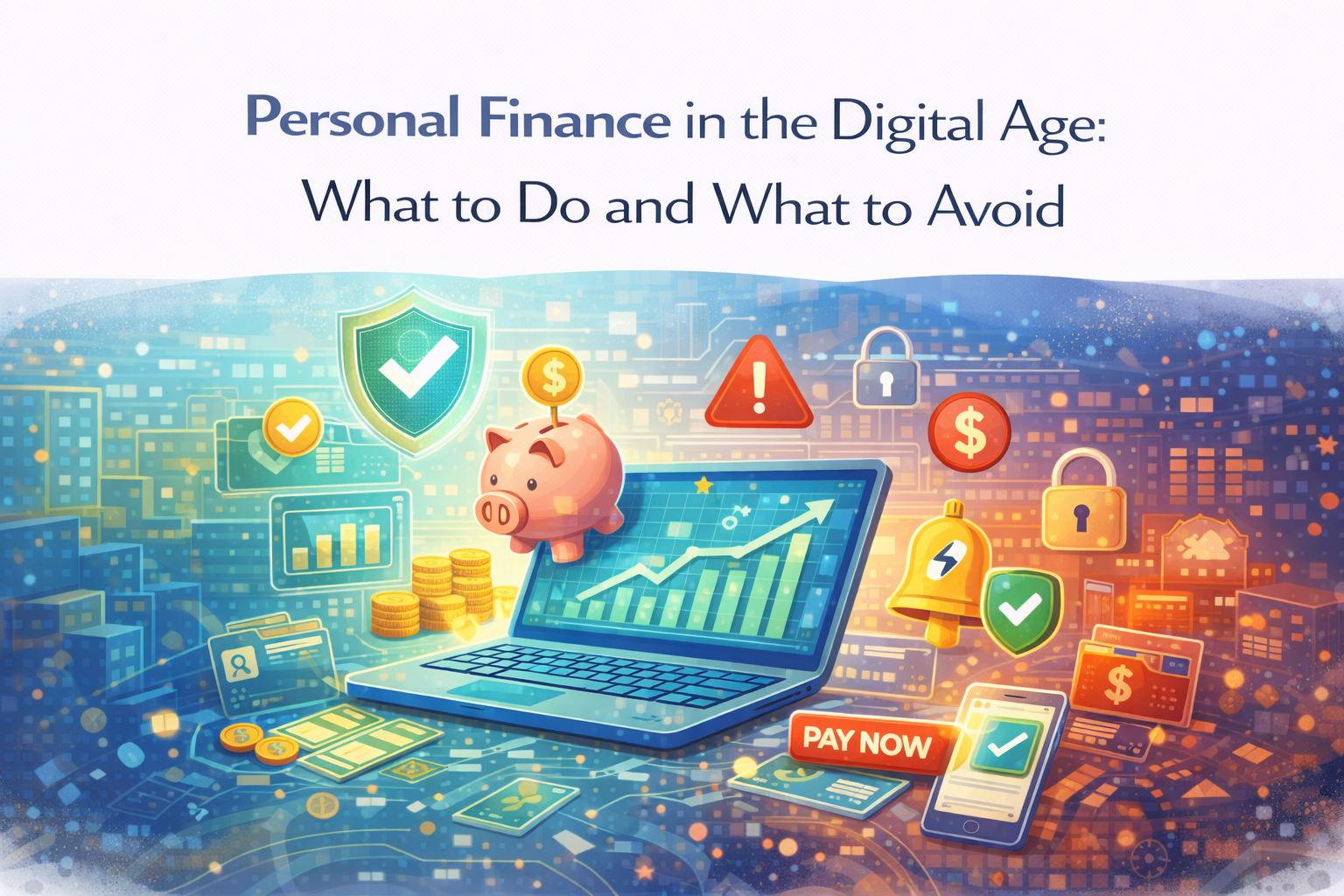
Personal finance has changed more in the last ten years than in the entire previous century. Digitalization, immediate access to information, and technological progress have transformed how people earn, spend, save, and invest. Today, managing finances well no longer depends solely on how much one earns, but on how financial decisions are made within a digital environment.
In this new era, great opportunities arise, but so do risks that many people fail to identify in time. Understanding what to do and what to avoid has become essential for maintaining stable financial health.
The New Context of Personal Finance
Previously, financial decisions were made with limited information. Today, the opposite occurs: there is an excess of data, applications, advice, and platforms promising to optimize money. The problem is not the lack of tools, but not knowing how to use them correctly. The digital age has democratized access to financial services: online accounts, automated investments, and digital insurance are within everyone’s reach. However, this ease can lead to errors if one does not act with sound judgment.
The Psychology of Digital Friction and “Nudging”
One of the most profound changes in the digital era is the intentional removal of “Payment Friction.” In the past, physically handing over cash triggered a psychological response of loss. Today, features like “one-click” buying and biometric payments (FaceID) are designed to bypass the rational part of the brain. Financial technology (Fintech) often uses “Dark Patterns”—user interface designs intended to trick users into spending more or subscribing to services they don’t need.
To counter this, a modern financial strategy must include “Intentional Friction.” This means manually disabling one-click settings or removing saved credit card information from browsers. By adding just 30 seconds of effort to a transaction, you allow your “System 2” thinking—the slow, analytical part of the brain—to evaluate if the purchase aligns with your long-term goals. Understanding that digital interfaces are a battlefield for your attention and capital is the first step toward reclaiming financial sovereignty in 2026.
What to Do: Improving Your Finances
- Gain Real Control of Income and Expenses: Use digital tools to automatically track spending. Identifying consumption patterns is the only way to stop “money leaks.”
- Use Technology as an Ally: Apps should help you organize budgets and analyze risks, not just distract you with notifications. Less is more when it comes to financial tools.
- Prioritize Saving Over Spending: Set clear objectives for your savings—emergencies, projects, or future stability. Automation is key here to ensure saving happens before you have the chance to spend.
- Educate Yourself Before Investing: Popularized investment platforms do not make the market less risky. Understand the product and have realistic expectations before committing capital.
Data Sovereignty and Platform Resilience
In the digital age, your financial identity is your most valuable asset. A common mistake is neglecting “Data Sovereignty”—knowing exactly who has access to your financial APIs. Through “Open Banking,” we often grant third-party apps permission to read our transaction history. While useful for budgeting, this creates a massive digital footprint that can be used by insurers or lenders to adjust your profile without your knowledge. Regularly auditing these permissions is a fundamental pillar of digital hygiene.
Furthermore, we must address Platform Resilience. As we move toward a cashless society, we become vulnerable to “centralized failures.” If your primary digital bank suffers a technical glitch or a cyberattack, you could lose access to your funds instantly. Strategic financial management now requires Systemic Diversification: maintaining accounts in at least two different financial institutions with different technological infrastructures. This ensures that a single point of failure—whether an algorithmic error or a server outage—does not paralyze your economic life. In 2026, being “banked” isn’t enough; you must be “digitally redundant.”
What to Avoid: Common Digital Pitfalls
- Impulsive Decisions: Digital immediacy often works against us. Flash offers or viral recommendations require analysis, not urgency.
- “Easy Money” Promises: If it sounds too good to be true, it probably is. Digital fraud spreads quickly through social media.
- Unplanned Debt: Digital credit is fast and convenient, but dangerous. Always analyze your real repayment capacity before taking on debt.
- Neglecting Security: Using weak passwords or public Wi-Fi for banking is like leaving your vault open. Security is just as important as the money itself.
Conclusion: Building Stability
Personal finance in the digital age is not about avoiding technology, but about learning to use it responsibly. By balancing innovation with discipline and education, you can build a solid foundation. Money remains a tool, not an end; knowing how to handle it makes the difference between financial stress and long-term peace of mind.