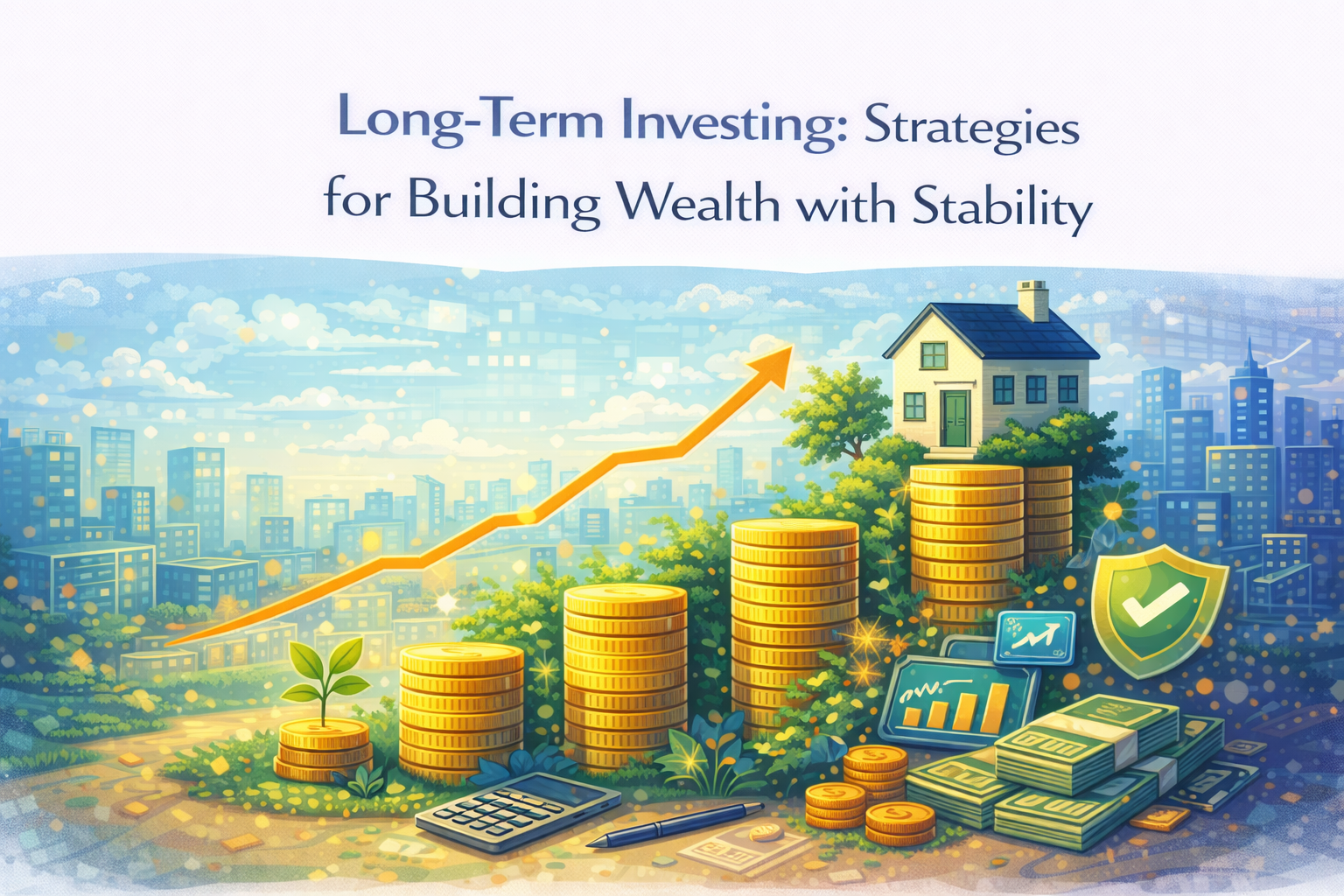
- Long-term investing is one of the most effective ways to build wealth. Unlike speculation or day trading, long-term investing is based on patience, discipline, and well-founded decisions. This strategy seeks to take advantage of the gradual growth of markets and reduce the impact of volatility.
Many people feel intimidated by investing because they believe it requires large sums of money. However, today it is possible to start with small amounts thanks to digital platforms and accessible financial products.
The Power of Time and Quality Assets
The basic principle of long-term investing is simple: buy quality assets and hold them for years. Time is the investor’s most important ally, as it allows them to benefit from compound interest. This means you not only earn returns on your initial capital but also on the accumulated gains. One of the most common mistakes is trying to “time the market.” No one can know for sure when it will rise or fall. Therefore, many experts recommend investing periodically—for example, every month. This technique, known as dollar-cost averaging, reduces the risk of entering at the worst possible moment.
Modern Portfolio Theory and Asset Correlation
To achieve true stability, a modern investor must go beyond simple saving and apply Modern Portfolio Theory (MPT). This strategy suggests that it is not enough to just “diversify” into many stocks; you must invest in assets that have low correlation. For instance, when the stock market is volatile, assets like gold, real estate, or government bonds often behave differently, acting as a structural hedge for your capital.
In the digital era, we also consider Digital Assets and REITs (Real Estate Investment Trusts) as tools to decentralize risk. The goal is to create an “All-Weather Portfolio”—one designed to withstand high inflation, deflation, or economic stagnation. By focusing on the Efficient Frontier, you aim to maximize your returns for the specific level of risk you are willing to take. Long-term wealth is built by surviving the “bear markets” (downward trends) so you can capitalize on the “bull markets” (upward trends). This requires a shift from “picking winners” to “building a resilient system” that functions regardless of which individual company succeeds or fails.
Investment Vehicles and Diversification
Among the most popular options for long-term investing are index funds. These funds replicate the behavior of indices like the global market or top companies (S&P 500). They offer automatic diversification, low fees, and strong historical results. Individual stocks can also be part of the strategy, especially solid companies with steady growth. It’s not about finding the next “miracle company,” but stable businesses with competitive advantages.
Another interesting alternative is real estate. Buying properties to rent can generate passive income and value appreciation over time. Although it requires more initial capital, it is a traditional and reliable way to create wealth. Diversification is key to reducing risk; it is never advisable to invest all your money in a single asset or sector.
Algorithmic Rebalancing and the Recency Bias
The “engine” of your wealth is compound interest, but its greatest enemy is Recency Bias—the human tendency to believe that what happened yesterday will happen tomorrow. When the market is booming, investors become overconfident; when it crashes, they panic. To counter this, smart investors use Algorithmic Rebalancing.
This technology periodically sells a portion of your over-performing assets and buys more of the under-performing ones. This forces you to “buy low and sell high” automatically without emotional interference. In the age of AI, many robo-advisors handle this with mathematical precision. Furthermore, you must account for Tax-Loss Harvesting. This digital strategy involves selling losing investments to offset the capital gains taxes from your winners. By minimizing the “tax drag” on your portfolio, you allow more of your money to remain invested. Over 30 years, reducing your costs and taxes by just 1% or 2% annually can result in hundreds of thousands of dollars in extra wealth. True stability is found in the small, consistent efficiencies that technology now makes accessible to everyone.
Conclusion: Patience as a Competitive Advantage
It is important to maintain a calm mindset. Markets will have temporary drops, and selling out of fear is usually a costly mistake. Historically, markets have recovered over time. Finally, your investment should be aligned with your personal goals. Not all investors have the same risk tolerance or the same milestones.
In summary, long-term investing is not a matter of luck, but of consistency. Small, regular contributions combined with patience can transform into significant wealth. The secret is not to win fast, but to stand firm for years.