Smart Insurance: The Technological Revolution of Financial Protection
For many years, insurance has been perceived more as a mandatory expense than a strategic tool for financial protection. Long contracts, slow processes, and opaque coverages have generated distrust among millions of people worldwide. However, this sector is currently undergoing a profound transformation driven by technology and, most notably, Artificial Intelligence (AI).
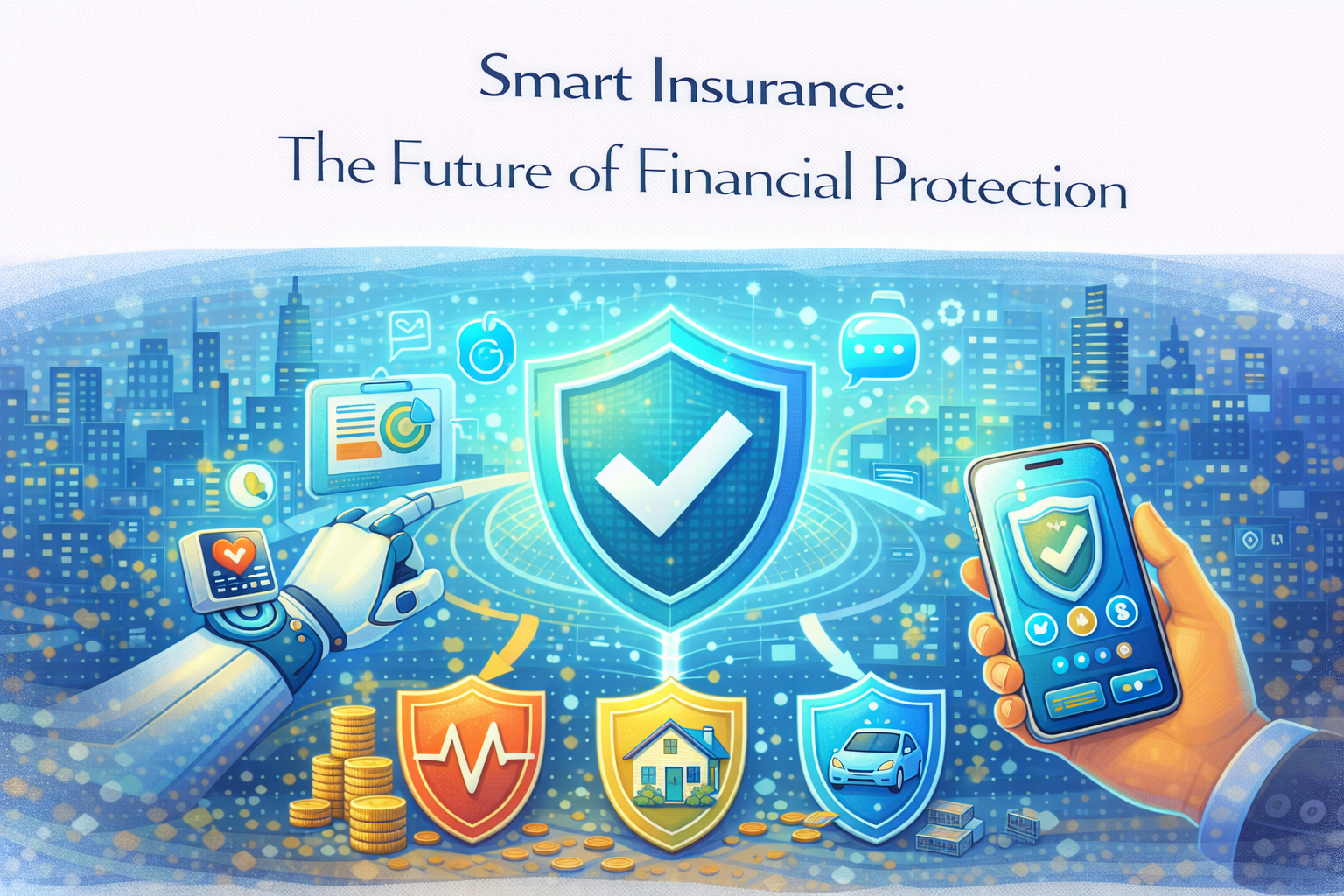
The rise of Smart Insurance is fundamentally changing how individuals shield themselves against economic risks, offering solutions that are more personalized, efficient, and transparent. This evolution does not only benefit insurance corporations; it empowers users by giving them greater control over their financial security.
Understanding the Essence of Smart Insurance
Smart insurance refers to insurance products that leverage advanced technologies—such as AI, big data analytics, and automation—to evaluate risks, personalize coverages, and optimize internal processes. Unlike traditional insurance, which relies on broad, static demographic statistics, smart insurance analyzes the real-time behavior of the user. This allows for the adjustment of prices, coverages, and conditions in a way that is significantly fairer and more precise. In essence, you are no longer paying to belong to a generic group; you are paying for your specific, individual risk profile.
Why the Traditional Model is Becoming Obsolete
The legacy model of insurance suffers from several systemic flaws that modern consumers are no longer willing to tolerate:
- Slow, paper-based bureaucratic processes.
- A complete lack of personalization (“one size fits all”).
- Imprecise risk evaluations that often penalize low-risk individuals.
- Fragmented and frustrating claims management.
In a hyper-digital world where people expect instant responses and clear solutions, this rigid model is becoming increasingly inefficient. Smart insurance emerges as the necessary response to these limitations, adapting to a more informed and demanding consumer base.
The Strategic Role of Artificial Intelligence
AI is the primary engine behind this sectoral shift. Its ability to process and interpret massive volumes of data in milliseconds allows for superior decision-making.
1. Hyper-Precise Risk Assessment AI can analyze hundreds of variables simultaneously: daily habits, historical data, environmental factors, and real-time behavior. This level of detail was impossible with traditional methods. Consequently, premiums can be adjusted with surgical precision, rewarding those who maintain responsible conduct and reducing the systemic costs of poor risk management.
2. The Integration of IoT and Real-Time Data A significant part of this intelligence comes from the Internet of Things (IoT). Smart homes with water leak sensors, telematics in vehicles that track driving patterns, and wearables that monitor health metrics provide a continuous stream of data.
This shift from “detect and repair” to “predict and prevent” is a game-changer for the real economy. If a sensor detects a small pipe vibration, the smart insurance system can dispatch a plumber before a flood even occurs. This proactive stance significantly reduces the “Pain of Paying” and transforms the insurer from a distant bill-collector into a proactive partner in wealth preservation.
Personalization and Operational Efficiency
Smart insurance allows for the creation of “bespoke” products. Instead of buying a generic health or auto package, users can access coverages tailored to their actual usage. This improves the perceived value of the insurance and strengthens the bond between the client and the provider. Furthermore, automation in claims management—where AI can evaluate a car scratch via a smartphone photo and authorize payment in minutes—removes the traditional stress and friction associated with accidents.
Transparency, Fraud Prevention, and Data Ethics
Fraud has historically been one of the biggest drains on the insurance industry, leading to higher premiums for everyone. AI allows for the detection of suspicious patterns and anomalous behaviors with unprecedented accuracy. This results in:
- Reduced losses for insurers.
- Fairer premiums for honest users.
- A more transparent and trustworthy financial system.
However, this data-heavy approach brings its own set of challenges, particularly regarding Data Privacy and Algorithmic Ethics. The intensive use of personal information requires robust security systems and a transparent framework for how data is used. There is a risk of “Digital Exclusion,” where those who opt out of data sharing might be unfairly penalized with higher rates. Ensuring that algorithms remain unbiased and that users maintain Data Sovereignty is a critical hurdle that the industry must overcome to maintain public trust.
The Rise of Parametric Insurance
Another fascinating development is Parametric Insurance. Unlike traditional policies that pay based on an assessment of actual damage, parametric insurance pays a set amount based on the occurrence of a specific event (e.g., an earthquake of a certain magnitude or a flight delay of over two hours). This model, powered by smart contracts and AI, ensures near-instant payouts without the need for a human adjuster. This level of certainty and speed is the ultimate form of financial protection in an unpredictable world.
Conclusion: A New Paradigm for Wealth Protection
Smart insurance represents a profound shift in how we protect our assets and financial stability. By leaving behind rigid, inefficient models in favor of human-centric, personalized, and transparent solutions, the sector is finally aligning with the realities of the 21st century.
For users, this means more control, better conditions, and protection that truly reflects their reality. For the global financial system, it represents a step toward a more just and sustainable environment. Understanding this evolution is not just about technology; it is about mastering the tools that will safeguard your economic future in an interconnected world.