Artificial Intelligence: The New Architect of the Financial System
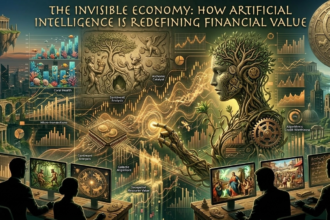
Artificial Intelligence has become one of the most influential technologies of the 21st century. Its impact is no longer limited to laboratories or big tech companies; today, it is present in people’s daily lives, especially in how money is managed. From financial apps to investment systems and insurance, AI is redefining the financial landscape.
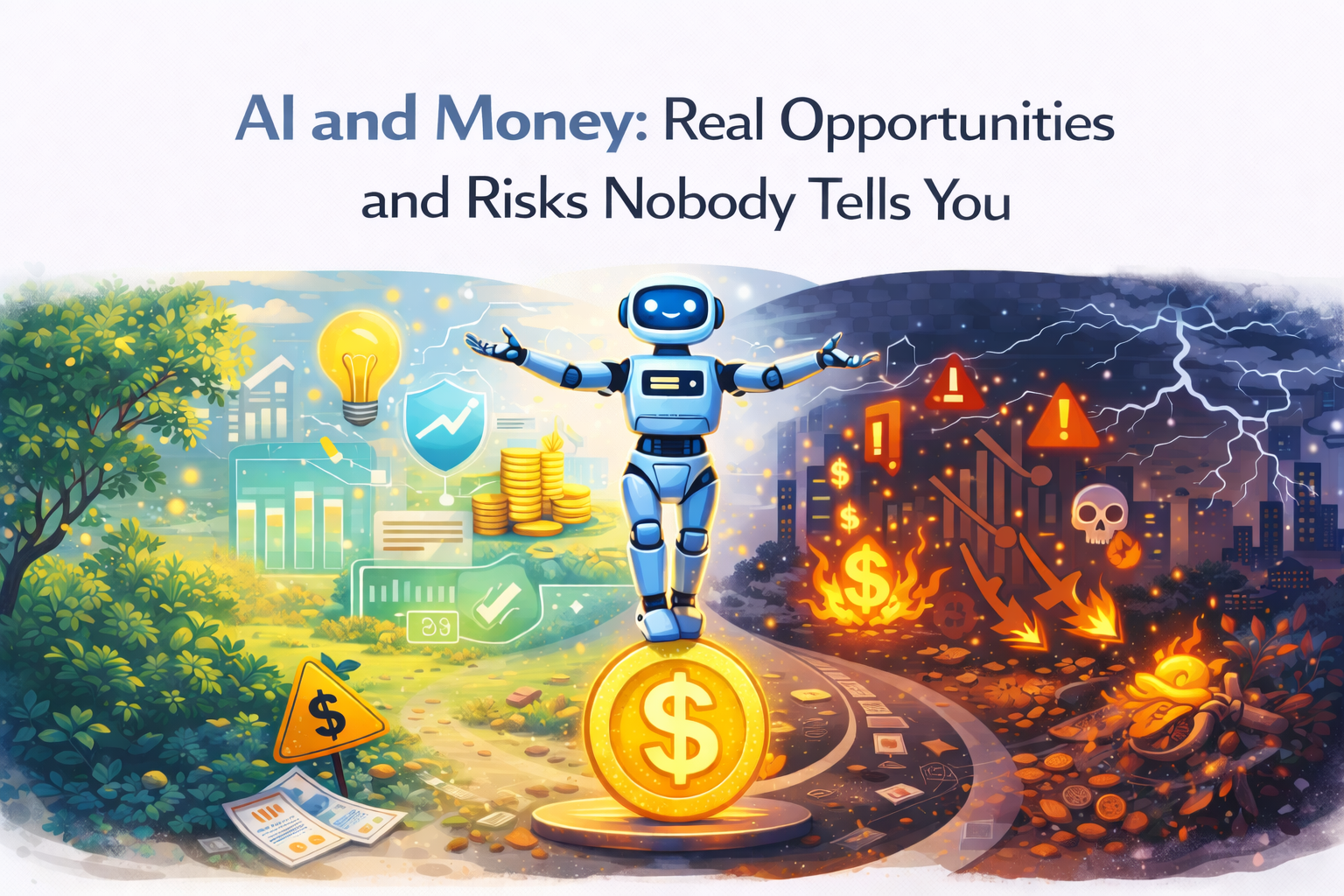
However, alongside the real opportunities it offers, there are risks that are not always explained with clarity. Understanding both sides is key to making responsible financial decisions in an increasingly automated environment.
How AI Entered the World of Money
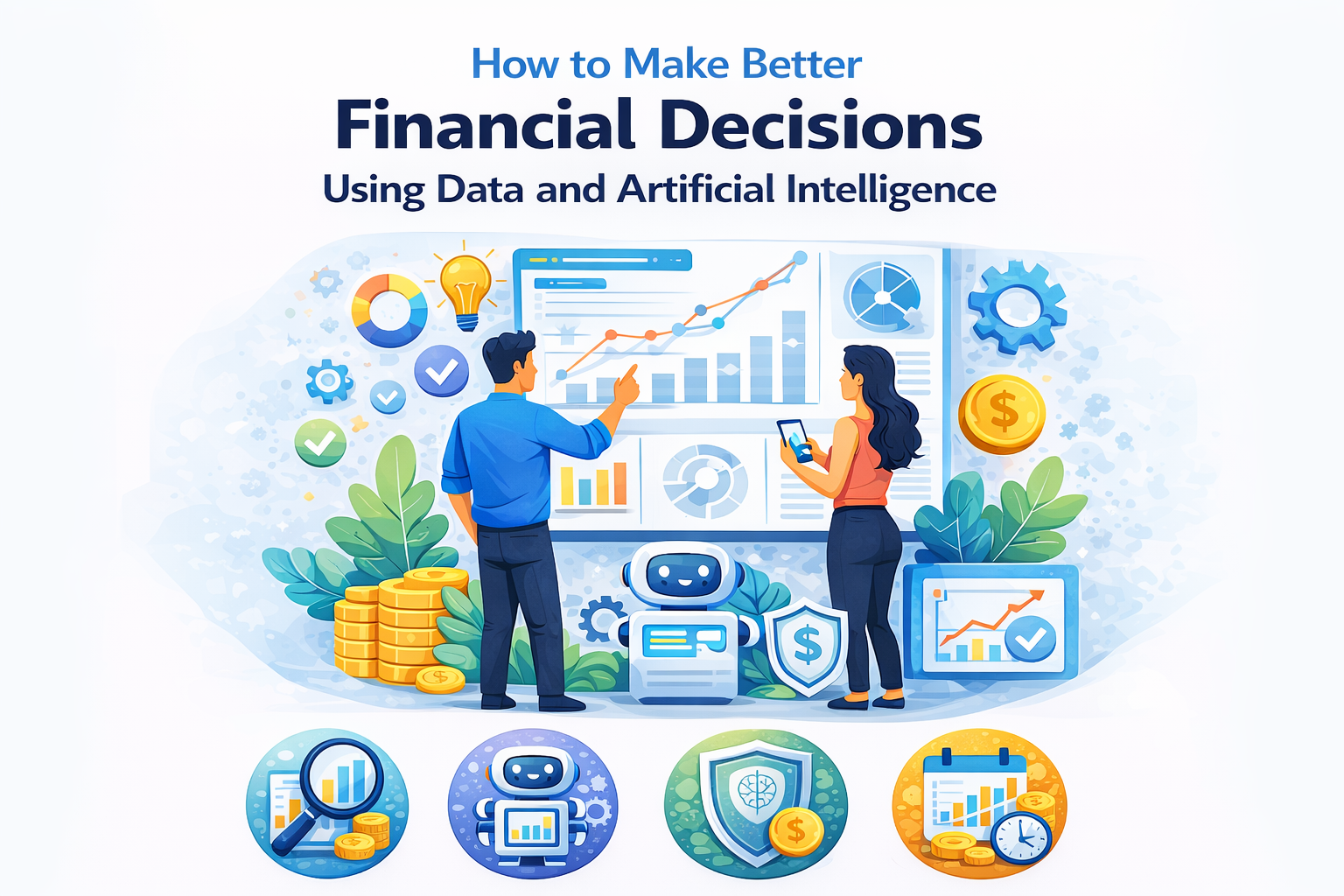
Money generates data constantly. Every payment, transfer, saving, or investment leaves information that can be analyzed. AI leverages this data to identify patterns, predict behaviors, and optimize financial decisions. Today, AI is used to:
- Analyze expenses and budgets.
- Evaluate financial risks.
- Automate investments.
- Detect fraud.
- Personalize financial products.
Real Opportunities in Financial AI
- Better Decision-Making: AI processes vast volumes of information in seconds, allowing for decisions based on real data rather than just intuition.
- Democratized Access: Advanced tools once reserved for high-income individuals are now available to everyone, promoting financial inclusion.
- Automation: It reduces repetitive tasks and minimizes human error in processes like expense categorization.
- Personalization: It offers recommendations tailored to individual habits, goals, and risk profiles.
[EXTENDED CONTENT: PART 1] Algorithmic Ethics and the “Black Box” Challenge
As we integrate AI deeper into our wallets, we face the “Black Box” problem. Many deep-learning models provide highly accurate predictions but offer no explanation as to why a certain decision was made. In finance, this lack of transparency is a significant risk. If an algorithm denies a loan or suggests selling an asset, the user—and often the developer—cannot trace the logic back to a specific data point. This has led to the rise of Explainable AI (XAI), a movement dedicated to making financial algorithms interpretable and accountable to prevent systemic discrimination.
Furthermore, we must address Algorithmic Bias. Since AI learns from historical data, it can inadvertently inherit human prejudices. For example, if past lending data was biased against a certain demographic, the AI might continue that trend, disguised as “objective” data analysis. Financial responsibility in 2026 requires demanding Algorithmic Audits to ensure that the technology facilitating our wealth isn’t simultaneously eroding social equity.
Risks That Are Not Always Explained
Despite the benefits, AI presents clear risks:
- Over-dependence: Delegating decisions entirely to an automated system is a mistake. AI is powerful but not infallible.
- Lack of Transparency: Users often receive recommendations without understanding the underlying logic.
- Data Privacy: AI requires sensitive information, which, if mismanaged, can lead to fraud or identity theft.
- Model Errors: If historical data is flawed, the AI’s output will be flawed as well.
[EXTENDED CONTENT: PART 2] Cybersecurity and the Rise of Autonomous Finance
The convergence of AI and Autonomous Finance—where software makes real-time decisions without human intervention—introduces a new frontier of risk: Adversarial Machine Learning. Cybercriminals are now using AI to probe financial algorithms for vulnerabilities. They can trigger “Flash Crashes” or manipulate automated trading bots by feeding them deceptive data. This makes AI-driven Cybersecurity a mandatory pillar of any modern financial strategy. Protecting your money now involves “Zero Trust” architectures and biometric verification to counter deepfake-based fraud.
Moreover, we are seeing the emergence of Agentic Finance, where personal AI agents negotiate interest rates or switch utility providers on your behalf. While efficient, this requires a shift in how we view Financial Sovereignty. We are moving from “managing money” to “managing the agents that manage our money.” This transition demands a higher level of technical literacy to ensure that these autonomous entities remain aligned with our long-term ethical and financial values.
The Role of Financial Education
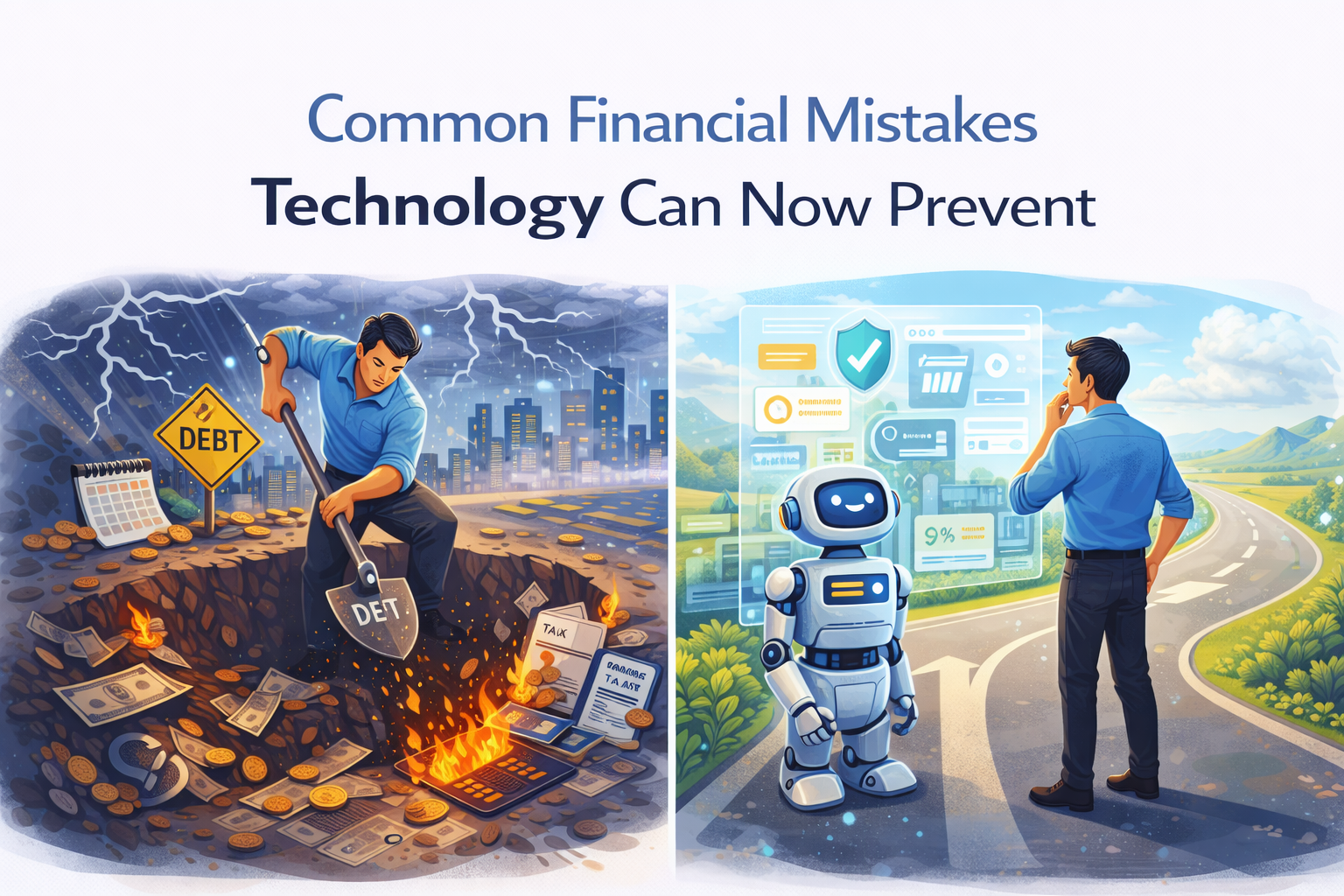
Technology moves faster than education. Understanding concepts like risk, liquidity, and how algorithms function is essential. Education allows us to interpret recommendations better and identify inconsistencies before they become costly errors.
Using AI Responsibly
To leverage AI safely:
- Understand the tool’s capabilities and limitations.
- Verify information before acting on a “tip.”
- Maintain a “Human-in-the-Loop” approach for major decisions.
Conclusion: Technology with Judgment
The true value of financial AI emerges when combined with education, judgment, and responsibility. Understanding both its benefits and its limits is the key to leveraging it without putting your financial stability at risk. The future of saving is no longer passive; it is strategic, conscious, and empowered by tech, but guided by the human mind.