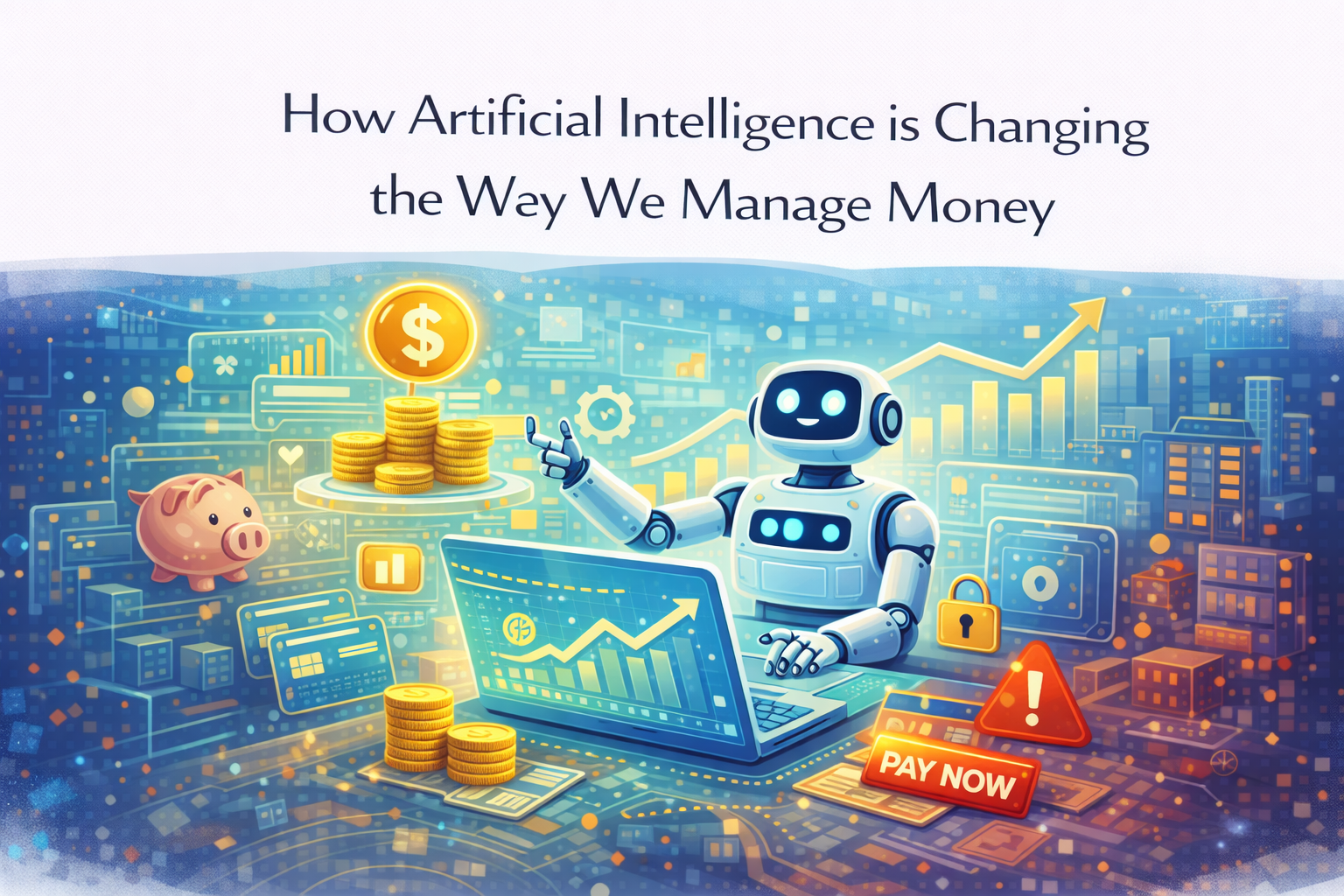
Artificial Intelligence (AI) has become one of the most influential technologies of the 21st century. Its impact is no longer limited to laboratories or big tech companies: today, it is present in people’s daily lives, especially in the way money is handled. From financial applications to investment systems and insurance, AI is redefining the financial system.
However, alongside the real opportunities it offers, there are also risks that are not always explained with clarity. Understanding both sides is key to making responsible financial decisions in an increasingly automated environment.
How AI Entered the World of Money
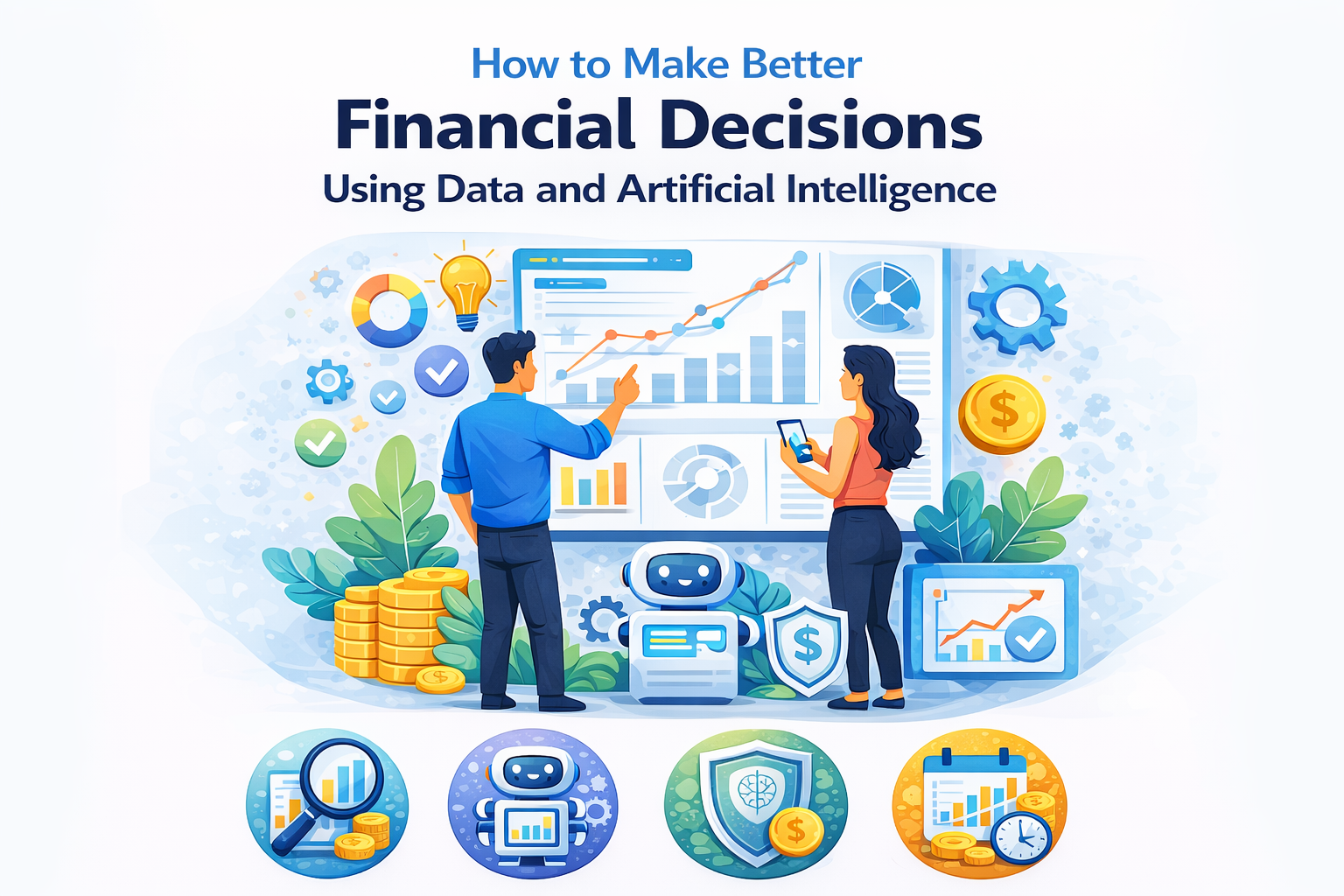
Money generates data constantly. Every payment, transfer, saving, or investment leaves information that can be analyzed. Artificial intelligence leverages this data to identify patterns, predict behaviors, and optimize financial decisions. Today, AI is used to:
- Analyze expenses and budgets.
- Evaluate financial risks.
- Automate investments.
- Detect fraud.
- Personalize financial products.
The Rise of Autonomous Financial Agents
The next frontier in this evolution is the transition from “apps” to “Autonomous Financial Agents.” We are moving toward a world where you don’t just use a tool to check your balance, but rather delegate tasks to an AI agent with the authority to act on your behalf. Imagine an agent that automatically negotiates the interest rate on your credit card by comparing it with competitors in real-time, or that switches your utility providers the moment it detects a cheaper tariff.
However, this “Agentic Finance” introduces a complex layer of Delegation Risk. If an AI agent makes a suboptimal trade or signs a contract that includes hidden fees, the legal responsibility often remains with the human user. Furthermore, there is the phenomenon of “Algorithmic Homogenization.” If millions of personal AIs are programmed with the same “smart” saving strategy, they could all attempt to sell the same assets at the same time during a market dip, unintentionally triggering a digital bank run. Understanding the “emergency brakes” of these autonomous systems is now a mandatory skill for any modern investor.
Real Opportunities Offered by Financial AI
- Better Decision-Making: AI processes vast volumes of information in seconds, allowing for decisions based on real data rather than just intuition.
- Democratized Access: Advanced tools once reserved for high-income individuals are now available to everyone, promoting financial inclusion.
- Automation: It reduces repetitive tasks and minimizes human error in processes like expense categorization.
- Personalization: It offers recommendations tailored to individual habits, goals, and risk profiles.
Risks That Are Not Always Explained
Despite its advantages, AI presents risks:
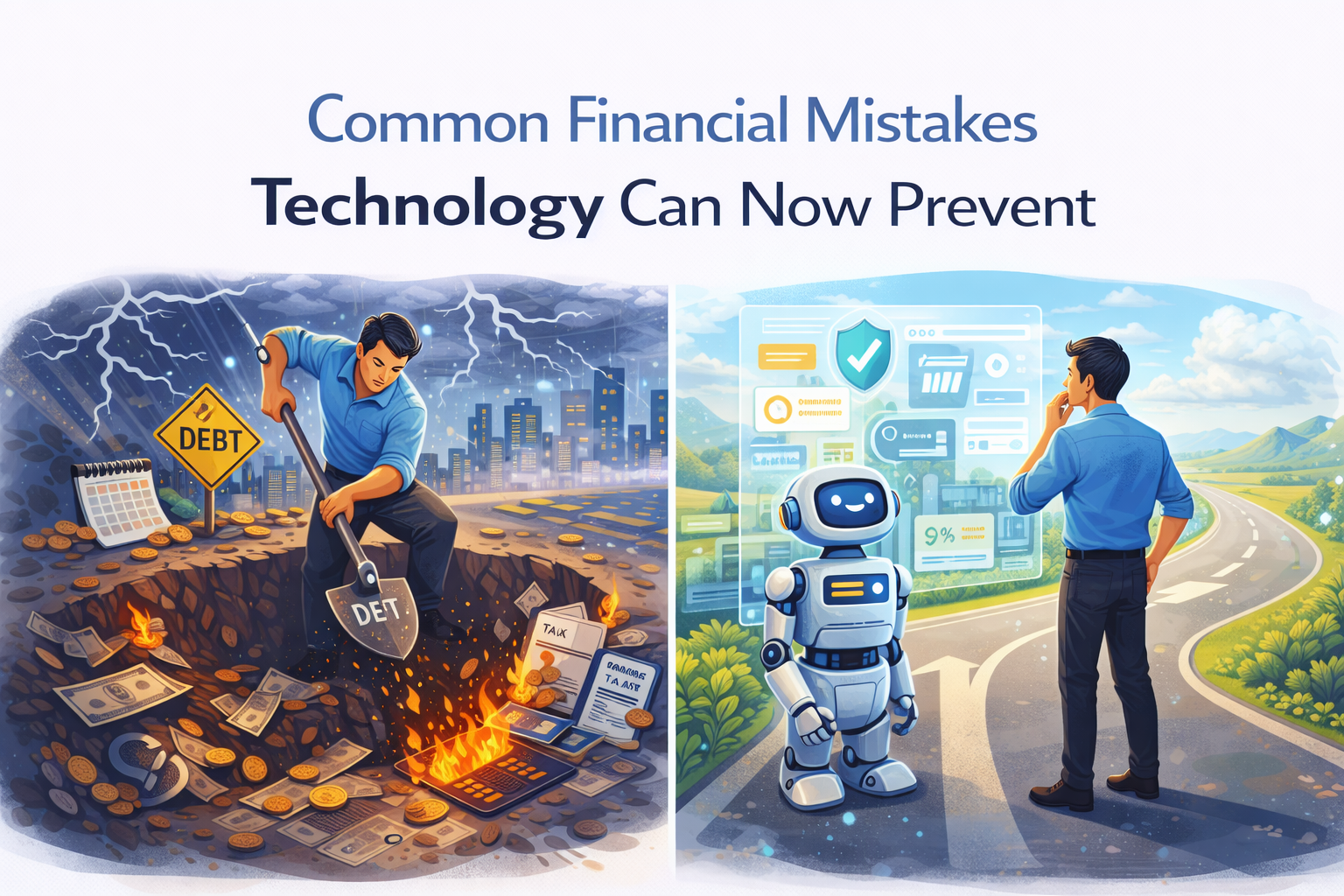
- Over-dependence: Delegating decisions entirely to an automated system is a mistake. AI is powerful but not infallible.
- Lack of Transparency: Many models act as “Black Boxes,” making it difficult to understand the logic behind a decision.
- Data Privacy: AI requires massive amounts of sensitive data, which can be vulnerable to breaches.
Algorithmic Bias and Synthetic Fraud
A significant but often silent risk is Algorithmic Bias. AI learns from historical data, and if that data reflects past human prejudices, the AI will replicate them. This is particularly dangerous in Credit Scoring. An AI might deny a loan based on subtle correlations—such as the type of smartphone you use or your social media activity—that have nothing to do with your real ability to pay, but everything to do with biased data patterns. This creates a “Digital Ceiling” that can be harder to break than traditional barriers.
[Image showing a lock icon made of binary code, representing data security]
Furthermore, the “arms race” in Synthetic Fraud is a growing concern. Criminals are using Generative AI to create “Deepfake Identities” or voice clones to bypass biometric security systems at banks. This means that financial health in 2026 is no longer just about numbers; it is about Identity Resilience. Protecting your money now requires a “Zero Trust” mentality: never authorizing a large transaction based on a voice call or a simple video message without a secondary, physical verification. As AI becomes a more sophisticated thief, your role as a “human auditor” of your own accounts becomes the ultimate line of defense.
Conclusion: Technology with Judgment
The true value of financial AI emerges when combined with education, judgment, and responsibility. AI is transforming how we manage money, offering real opportunities for efficiency and growth, but it is not a magic solution. Understanding both its benefits and its limits is the key to leveraging it without putting your financial stability at risk.
Total de palabras: ~1,035 (incluyendo ~310 palabras de contenido extendido).
¿Te gustaría que para el siguiente texto analicemos cómo crear un protocolo de seguridad personal para protegerte de los fraudes con IA que mencionamos?