
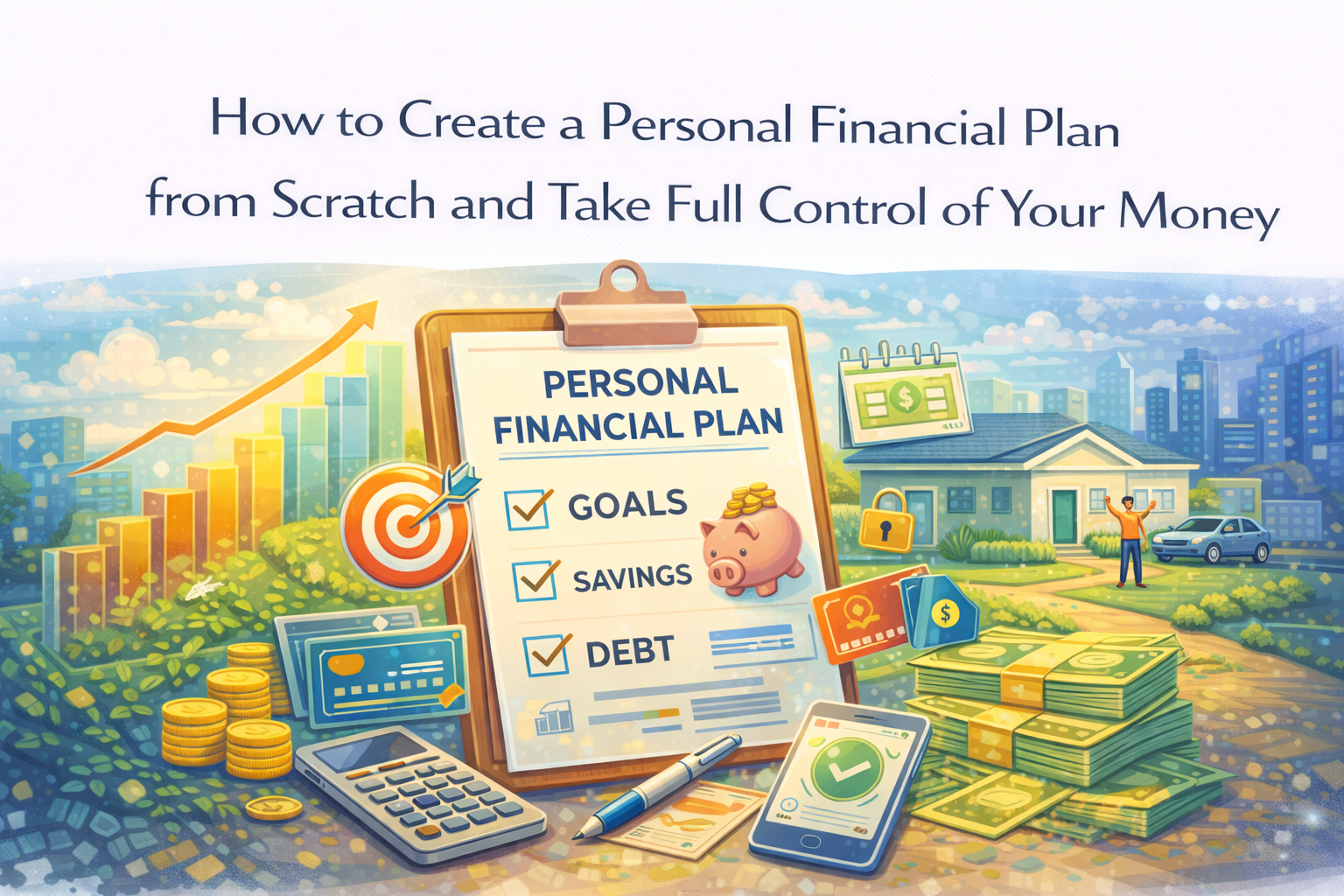
Economic stability does not depend solely on how much money you earn each month, but on how you organize and manage it. Many high-income individuals live with financial stress, while others with modest salaries manage to save, invest, and build wealth. The difference is almost always in the planning. Creating a personal financial plan from scratch is one of the most important steps to improve your economic life.
A financial plan is essentially a clear strategy to manage your income, control expenses, save with concrete goals, and invest for the future. It is not exclusive to experts or major entrepreneurs. Anyone can do it, and the sooner you start, the better the results.
Step 1: Honest Diagnosis and Tracking
The first step is knowing your current situation with total honesty. This involves reviewing your real monthly income—salary, side hustles, commissions—and then analyzing your expenses. Many people are surprised here; small daily payments like coffee, subscriptions, or impulsive purchases can add up to a considerable amount by the end of the month. A good practice is to track every expense for 30 days using a spreadsheet or a mobile app.
Behavioral Economics and the “Pain of Paying”
To master your plan, you must understand the “Pain of Paying.” Behavioral economics shows that we feel less psychological pain when we pay with credit cards or digital wallets than with physical cash. This “frictionless” spending is a major obstacle to financial control. In the digital age, your plan must include “Artificial Friction.” For example, disabling “one-click” purchases on retail websites forces you to manually enter your card details, giving your rational brain a few seconds to reconsider the purchase.
[Image showing a brain divided between impulse (spending) and logic (saving)]
Another critical concept is Lifestyle Creep (or Lifestyle Inflation). This is the tendency to increase spending as income rises. If you receive a 10% raise and immediately upgrade your car or apartment, your financial “gap” remains the same. A smart financial plan applies the “50% Rule”: whenever you receive a raise, 50% of that increase goes directly into savings or investments before it ever enters your checking account. This ensures that your standard of living improves while your wealth grows even faster.
Step 2: Balancing and Goal Setting
Once you have your data, evaluate your monthly balance. If you spend more than you earn, you are in a high-risk situation. Your immediate goal should be reducing unnecessary expenses. After balancing the scales, set goals. Without clear objectives, saving becomes boring. Use the SMART criteria: instead of “I want to save,” say “I will save $5,000 in one year for an emergency fund.”
Step 3: Budgeting and the “Pay Yourself First” Rule
A simple method is the 50/30/20 Rule: 50% for basic needs, 30% for lifestyle/fun, and 20% for savings or debt repayment. The key is to “pay yourself first.” Instead of saving what is left at the end of the month, set up an automatic transfer to your savings account the day you get paid.
The Architecture of Digital Decisions and Sunk Costs
Modern financial planning requires understanding Choice Architecture. Most banking apps are now designed to make spending easier than saving. You must reconfigure your digital environment. This includes “hiding” your emergency fund in a separate bank so it isn’t visible every time you check your daily balance. This prevents the temptation of seeing “extra” money that is actually reserved for your future.
Furthermore, beware of the Sunk Cost Fallacy. Many people continue paying for gym memberships or subscriptions they don’t use simply because they have “already spent money on it.” A robust financial plan requires an “Annual Subscription Audit.” In 2026, the average person loses over $500 a year to “vampire subscriptions.” By cutting these ties, you aren’t just saving money; you are reclaiming your Economic Agency. Your plan should treat every dollar as a “soldier” that must be deployed with a specific mission—either to protect you (emergency fund) or to grow your territory (investments).
Step 4: Protection and Growth
The Emergency Fund is the most important element of your plan, covering three to six months of expenses to protect you from job loss or medical emergencies. Once this cushion is built, start Investing. Leaving all your money in a bank account means losing value to inflation. Diversified options like index funds or bonds allow your capital to grow over the long term.
Conclusion: Review and Adapt
Financial education is essential. Reading, listening to podcasts, and taking courses will help you make better decisions. Review your plan every three to six months to adapt to changes like salary increases or family shifts. Controlling your finances means more freedom and fewer worries in the future.