Long-Term Wealth Construction: Strategies for Stability and Growth
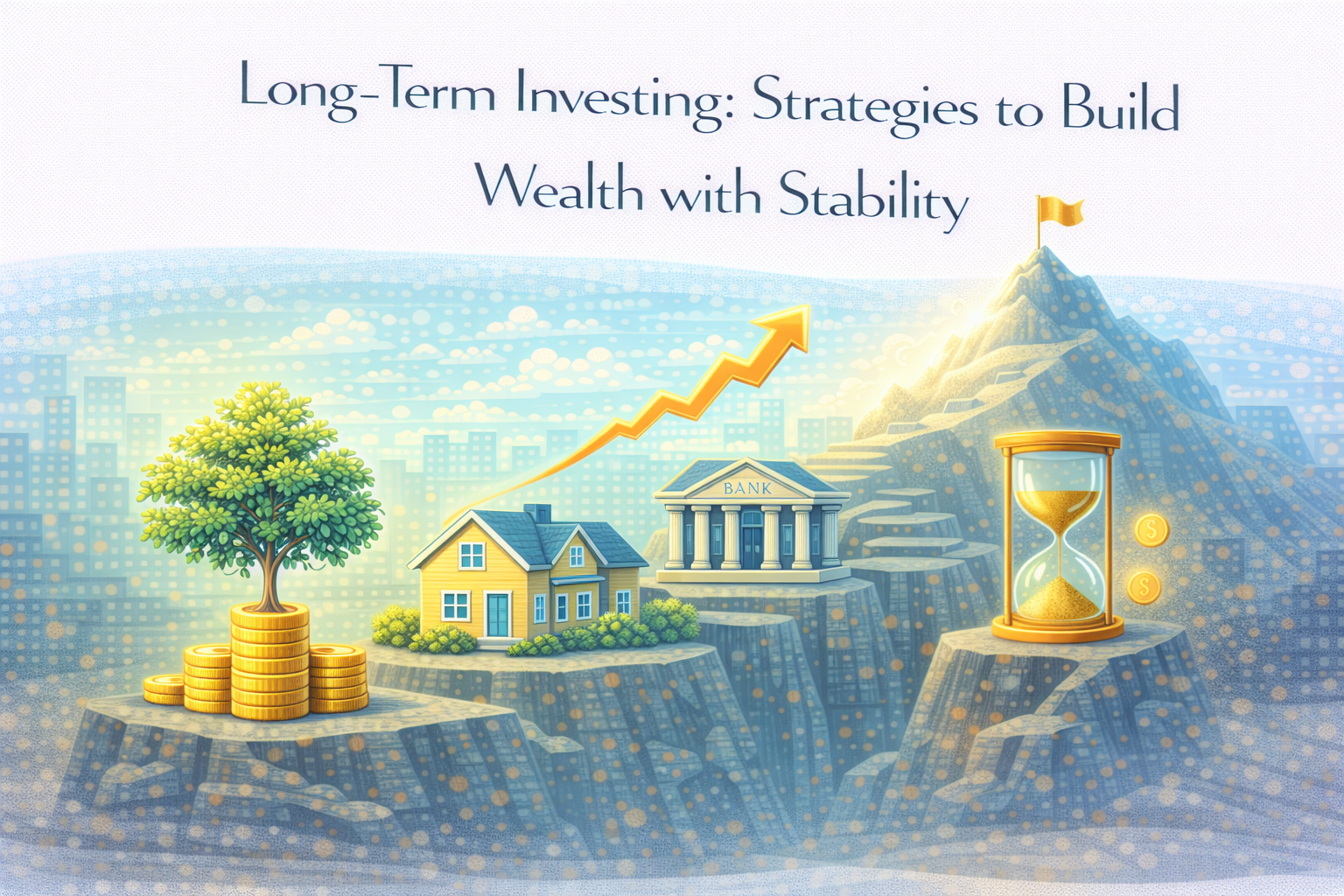
Building wealth is rarely the result of quick decisions or high-risk bets; rather, it is the product of a consistent and disciplined strategy over time. Long-term investing is based on leveraging the sustained growth of markets, the power of compound interest, and proper risk management. In a changing economic environment, this philosophy remains one of the most effective ways to achieve financial goals with greater stability.
The Long-Term Perspective: A Competitive Advantage
One of the primary mistakes many investors make is focusing on short-term market movements. Daily fluctuations, economic news, and unexpected events generate volatility, but they rarely define the ultimate outcome of a long-term strategy. Investing with a multi-year vision allows one to navigate economic cycles, take advantage of recoveries following crises, and reduce the impact of impulsive decisions. Historically, financial markets have shown a long-term growth trend, despite intermediate periods of decline.
To master this advantage, one must understand the Efficient Market Hypothesis (EMH). This theory suggests that asset prices reflect all available information, making it nearly impossible for individual investors to consistently “beat the market” through short-term speculation. By accepting this, a long-term investor shifts their focus from “picking winners” to “capturing market returns.” Furthermore, we must be wary of Survivorship Bias—the tendency to look only at the companies or funds that succeeded while ignoring the many that failed. A truly robust long-term strategy accounts for this by utilizing broad-based index funds, ensuring that your portfolio captures the entire upward trajectory of the economy rather than gambling on a few individual outliers.
Compound Interest: The Engine of Wealth
Compound interest is one of the most powerful concepts in personal finance. It consists of reinvesting earnings so that they, in turn, generate new returns. Over time, this effect accelerates and can multiply the initial capital significantly. The earlier one begins to invest, the greater the impact of compound interest. Even small, consistent contributions can yield substantial results over the long term. The key lies in consistency and avoiding the premature withdrawal of gains.
The mathematical beauty of compounding is best illustrated by the “snowball effect.” In the first decade, your contributions do the heavy lifting. In the second and third decades, the interest begins to earn more than your original principal. This is why Time in the Market is far more critical than Timing the Market. Every year you delay starting is not just a year of missed growth; it is a year of missed exponential growth. This realization is what separates the casual saver from the true wealth builder: the understanding that your money is a workforce that grows more productive every year it is left undisturbed.
Diversification and Algorithmic Rebalancing
A stable investment strategy requires proper diversification. Distributing capital across different asset types, sectors, and regions helps reduce the risk that a negative event will significantly affect the entire portfolio. While stocks offer higher growth potential but more volatility, bonds provide stability and predictable income.
To maintain this stability, the modern investor utilizes Algorithmic Rebalancing. Over time, some assets will grow faster than others, causing your original allocation (e.g., 60% stocks and 40% bonds) to drift. If stocks surge to 80% of your portfolio, your risk level increases beyond your comfort zone. Rebalancing involves selling a portion of the over-performing assets and buying more of the under-performing ones.
This practice forces you to “buy low and sell high” with mathematical precision, removing the emotional struggle of decision-making. In the digital age, many platforms automate this process, ensuring that your risk profile remains constant regardless of market euphoria or panic. By sticking to a rebalancing schedule—whether quarterly or annually—you ensure that your portfolio remains a resilient system capable of surviving any economic climate.
Periodic Investment and Financial Discipline
Attempting to guess the best time to invest is an extremely difficult task, even for professionals. Therefore, many investors opt for Dollar-Cost Averaging (DCA), which consists of contributing capital regularly regardless of market levels. This approach allows for buying more assets when prices are low and fewer when they are high, averaging the investment cost over time. Moreover, it fosters financial discipline and reduces the stress associated with short-term decisions.
Adjusting the Strategy and Minimizing Costs
Long-term investing is not static. As personal circumstances change, so must risk levels. In early stages, with a broad investment horizon, it is reasonable to assume greater exposure to growth assets. As major goals like retirement approach, it is common to increase the proportion of stable assets to protect accumulated capital.
Finally, keeping costs low is essential. Small fees on financial products can seem insignificant, but their cumulative impact over decades can be devastating to your final net worth. Choosing low-cost index funds or efficient digital platforms ensures that a larger portion of the returns stays in the investor’s pocket.
Conclusion: Sustainability through Constancy
Building wealth is not a matter of speed, but of constancy and intelligent planning. The combination of discipline, diversification, cost control, and patience creates a solid foundation for capital growth. In an environment where uncertainty is constant, betting on sustained and well-structured strategies allows for reducing the impact of volatility and harnessing the potential of the markets over time.