Wealth and the Macroeconomy: Growth, Inflation, and Your Purchasing Power
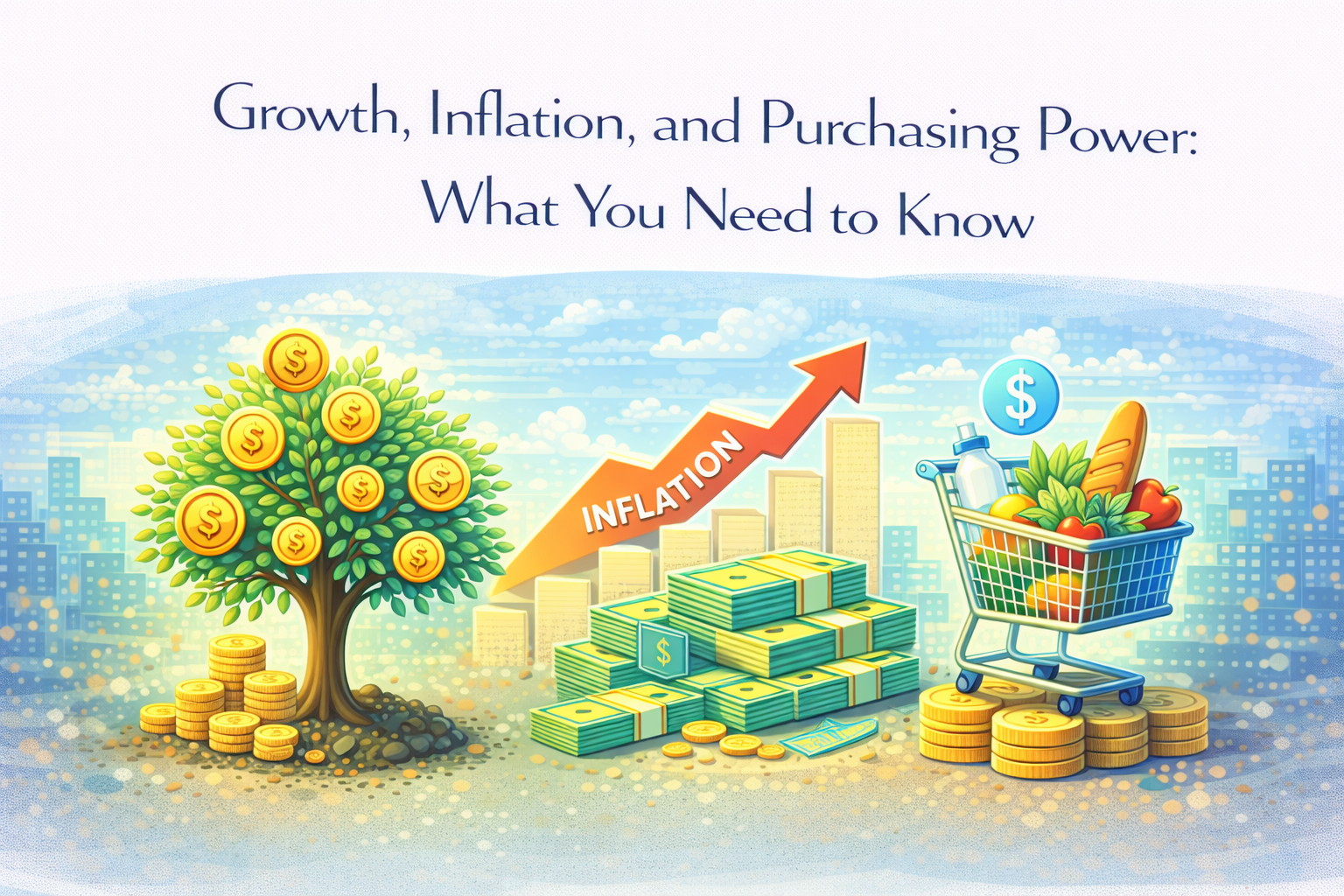
When we discuss economic stability, most people think of three specific pillars: economic growth, inflation, and purchasing power. Although these terms are frequently mentioned in news reports and financial analyses, their real impact is felt in a very concrete way: how much you can buy with your money today versus how much you will be able to buy in the future. Understanding how these factors interconnect is the essential key to making superior financial decisions.
Economic Growth: The Engine of Opportunity
Economic growth refers to the increase in the production of goods and services within a country over time, typically measured by Gross Domestic Product (GDP). When an economy grows, businesses sell more, jobs are created, and, in theory, personal incomes tend to rise. Growth is vital because it allows for improvements in quality of life, infrastructure, education, and health.
However, as a sophisticated financial actor, you must distinguish between Extensive and Intensive Growth. Extensive growth comes from simply using more resources (more labor, more debt), whereas intensive growth comes from productivity and innovation. From a personal finance perspective, intensive growth is the only kind that leads to sustainable increases in real wages. If growth is merely fueled by debt, it often leads to a “boom-and-bust” cycle that can trap unprepared investors. Understanding where a country’s growth originates allows you to anticipate whether the current prosperity is a solid foundation or a fragile bubble.
Inflation: The Silent Erosion of Wealth
Inflation is the generalized increase in prices over time. When inflation occurs, money loses its value because the same amount of currency buys fewer products and services. While a moderate level of inflation is considered normal in growing economies, rapid acceleration directly attacks the consumer’s pocket.
To truly understand this, one must analyze the Cantillon Effect. This economic concept explains that when new money enters the economy (often through central bank policies), it does not distribute evenly or instantly. Those closest to the source of money—banks and large corporations—receive it first and can spend it before prices rise. By the time that money reaches the average consumer, prices have already increased, effectively transferring wealth from the bottom to the top. This “silent tax” means that if your savings are sitting in a traditional low-interest bank account, you are not just “staying still”; you are actively falling behind. Inflation doesn’t just raise prices; it reconfigures the entire social and economic landscape, favoring debtors and asset owners while punishing savers.
Purchasing Power: The Ultimate Metric of Well-Being
Purchasing power measures what you can buy with your real income, accounting for the effect of inflation. It is the true indicator of whether your financial situation is improving or deteriorating. You might receive a 5% raise, but if the cost of living increases by 8%, your standard of living has actually decreased.
[Image showing the difference between nominal income and real income after adjusting for inflation]
In the digital era, we must also consider “Shadow Inflation” or “Shrinkflation,” where prices remain the same but the quantity or quality of a product decreases. A robust financial strategy requires looking past Nominal Values (the number on your paycheck) and focusing on Real Values (what those numbers can actually acquire). Your purchasing power is influenced by:
- Income levels and tax brackets.
- The “Consumer Price Index” (CPI) vs. your personal spending basket.
- Housing and energy costs.
- Currency strength in a globalized market.
Protecting Your Future: Strategies for Resilience
Although you cannot control global inflation or national GDP, you can implement measures to mitigate their impact. Relying on a single salary increases your vulnerability to economic shifts. In dynamic economies, continuous professional upskilling is a hedge against inflation, as high-demand skills often command wages that outpace rising prices.
Furthermore, a critical strategy is the pursuit of Positive Real Returns. If inflation is at 6%, any investment returning 4% is still losing you 2% in purchasing power every year. To protect your wealth, you must seek assets that historically outperform inflation, such as diversified equities, real estate, or inflation-protected securities (TIPS).
Managing Inflationary Expectations is also a psychological tool. If you anticipate higher prices in the future, you might decide to make necessary large purchases now rather than later. However, this must be balanced against the risk of over-indebtedness. A well-structured financial plan considers these macroeconomic cycles, moving from “defense” (cash and liquidity) to “offense” (growth assets) depending on the prevailing economic climate.
Conclusion: Mastering the Dynamics of Value
Economic growth, inflation, and purchasing power are not abstract concepts found only in textbooks; they determine your ability to save, your standard of living, and your future opportunities. Understanding how they interact allows you to transition from being a passive observer of the economy to an active manager of your own prosperity.
Ultimately, protecting your purchasing power is about protecting your peace of mind and your life projects. By thinking in terms of decades rather than months, and by focusing on real value rather than nominal numbers, you can build a financial legacy that withstands the inevitable cycles of the global economy.