Insurance and Peace of Mind: The Relationship Between Money and Mental Health
Introduction
When people talk about insurance, most immediately think of contracts, premiums, and administrative procedures. Rarely do they associate insurance with emotional well-being. However, financial protection has a direct and powerful impact on mental health. Living with the constant fear that any unexpected event could turn into a serious financial crisis generates stress, anxiety, and a deep sense of insecurity.
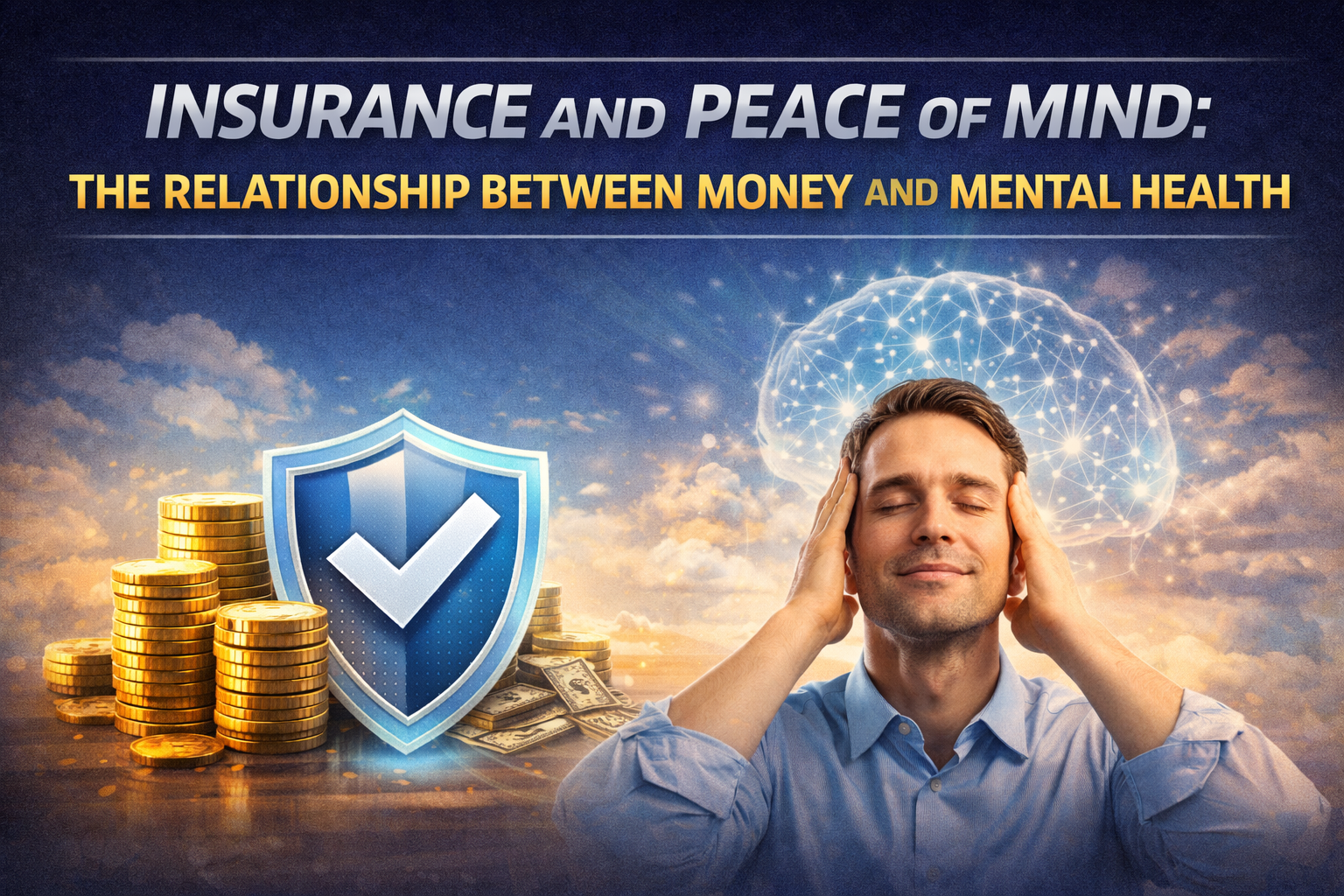
In this context, insurance serves not only an economic function but also a psychological one: it provides stability and reduces uncertainty. Knowing that there is a safety net in place allows individuals and families to face life with greater confidence and emotional balance.
Financial Stress as a Silent Problem
Financial worries are one of the main sources of stress in adult life. Bills, debts, unexpected medical expenses, home repairs, or sudden loss of income can create a persistent mental burden. Even when it is not openly visible, this type of stress affects sleep quality, concentration, mood, and overall well-being.
When individuals lack financial protection mechanisms, every unforeseen event feels like a serious threat. This constant perception of danger creates a long-term sense of vulnerability. Over time, this can develop into chronic anxiety and even lead to physical health problems such as high blood pressure, fatigue, and weakened immune response.
Financial stress is often called a “silent problem” because many people normalize it. They assume it is simply part of adult life, without realizing how deeply it affects their mental health and daily performance.
Uncertainty as a Driver of Anxiety
A large portion of financial distress does not come solely from lack of money, but from uncertainty. Not knowing how one would handle a serious illness, an accident, or a sudden loss of income creates a feeling of losing control.
The human mind tends to anticipate worst-case scenarios. This constant anticipation fuels worry and emotional exhaustion. Even stable incomes do not completely eliminate anxiety if there is no clear protection plan.
Insurance, when properly understood, does not eliminate problems but significantly reduces uncertainty. Knowing that specific situations are covered allows people to live with greater peace of mind. This sense of predictability reduces mental strain and helps individuals feel more in control of their future.
Insurance as a Tool for Emotional Stability
Having appropriate insurance does not mean living free of difficulties. Instead, it means having a safety net that softens the emotional impact of unexpected events.
For example:
• Health insurance reduces worry about medical emergencies and treatment costs.
• Home insurance prevents household accidents or natural disasters from becoming financial catastrophes.
• Life insurance provides peace of mind to people who support dependents.
This sense of protection directly influences psychological well-being because it reduces the fear of losing everything due to a single unforeseen event. The emotional relief that comes from being prepared allows individuals to focus on personal goals, relationships, and daily responsibilities with greater clarity.
Impact on Decision-Making
Financial insecurity strongly influences how people make decisions. Those who constantly fear unexpected expenses tend to avoid risks. They may postpone education, reject career opportunities, avoid starting a business, or resist changing jobs.
The need to preserve minimal stability can limit personal and professional growth.
When a foundation of financial protection exists, decisions are made with greater clarity and less emotional pressure. Financial peace of mind not only reduces stress but also expands available opportunities. People feel more confident planning for the future, investing in their skills, and pursuing long-term goals.
This improved decision-making process strengthens self-esteem and reinforces a sense of personal control.
The Mistake of Seeing Insurance Only as an Expense
Many people view insurance payments as an unnecessary burden, especially if they go years without filing a claim. However, this perspective ignores the psychological value insurance provides.
Insurance is not paid for a future accident alone — it is paid for present peace of mind.
From a mental health perspective, insurance can be considered an investment in emotional stability. It reduces the likelihood of financial crises that typically have deep and lasting effects on personal and family well-being.
Just as people invest in healthy food or gym memberships to prevent future illness, insurance works as preventive care for financial and emotional health.
Balance Between Protection and Over-Insurance
Peace of mind does not come from purchasing every available insurance policy. On the contrary, excessive coverage can create additional stress through higher fixed expenses, complex paperwork, and a feeling of financial dependency.
The key is to evaluate real risks and protect areas that would have serious consequences if disrupted.
A proper balance between coverage and cost ensures that insurance fulfills its purpose: providing reassurance rather than creating new financial pressure.
Financial Education and Psychological Well-Being
The relationship between money and mental health is influenced not only by income but also by financial literacy. Understanding how insurance works, what policies truly cover, and which protections are priorities reduces fear of the unknown.
Lack of information often increases distrust and feelings of vulnerability.
Conversely, when people clearly understand their coverage and know what to expect during difficult situations, anxiety decreases significantly. Knowledge empowers individuals to make rational decisions instead of emotionally driven ones.
Effects on the Family Environment
Financial peace of mind benefits not only individuals but also their families. Economic worries often lead to household tension, relationship conflicts, and emotional strain between partners.
Having a basic protection structure reduces these frictions and contributes to a more stable home environment.
Additionally, the feeling of protecting loved ones from potential hardship strengthens emotional well-being for those responsible for family finances. It creates a sense of purpose, responsibility, and confidence.
Children also benefit indirectly, as they grow up in a more stable and less stressful environment.
Conclusion
Insurance is not merely a financial product. It is a tool that directly influences mental health and personal security.
It reduces uncertainty, softens the emotional impact of unexpected events, and allows individuals to make decisions with greater calm and confidence.
Understanding the connection between financial stability and psychological well-being is essential for building a more balanced life.
The true value of insurance lies not only in the day it is used, but in the peace of mind it provides every single day beforehand.